

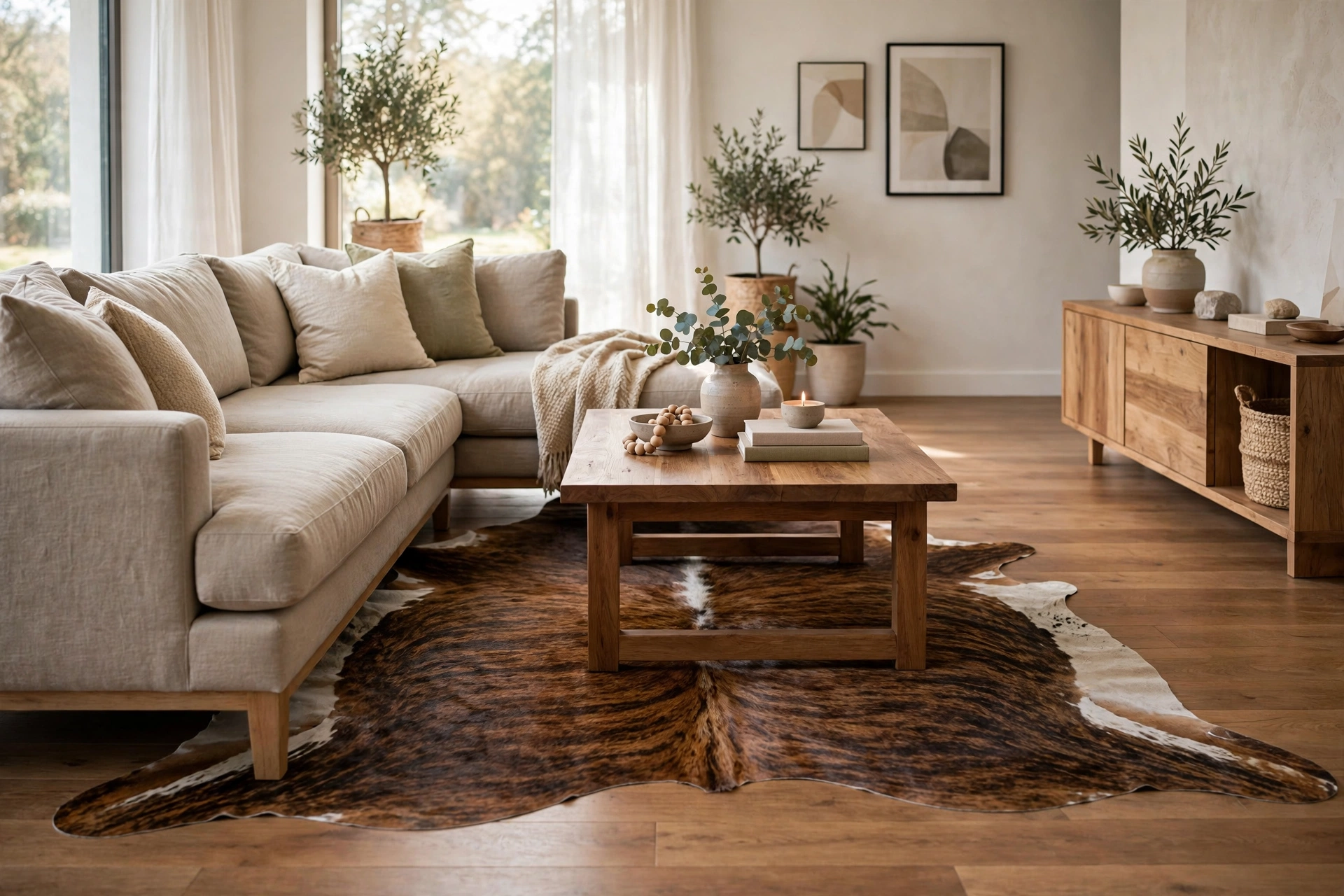
A large cowhide rug can transform a living room — adding natural texture, warmth, and a one-of-a-kind pattern no machine-made rug can replicate. However, getting the size and placement wrong can make even a beautiful hide look lost or awkward. This guide covers the large cowhide rugs for living room sizing rules and placement techniques interior stylists use, so your rug looks intentional from every angle.
Cowhide rugs are naturally shaped hides, typically measuring around 6 x 8 feet for a large single hide. Their organic shape and unique markings — from classic black-and-white to brindle, palomino, and tricolour — make each one a statement piece. Because no two hides are identical, placement matters even more than with rectangular rugs.
Beyond their striking looks, large cowhide rugs offer practical advantages that make them ideal for living spaces.
The hair-on-hide texture adds a tactile, organic layer that softens modern furniture and contrasts beautifully with leather sofas, timber, and stone. In addition, the natural markings create visual interest without needing bold colours.
From Scandinavian minimalism to rustic farmhouse, Hamptons, and contemporary spaces, cowhide adapts remarkably well. A monochrome hide suits minimalist rooms, while brindle or tricolour hides add character to neutral schemes.
Choosing the right size starts with your room — not the rug. Measure your seating area first, then select accordingly.
In compact living rooms, a standard large single hide (around 6 x 8 feet) is usually plenty. Centre it under the coffee table with the front legs of the sofa resting on the hide. Avoid oversized rugs here — they can overwhelm a small space and bunch against walls.
For average living rooms, a large single hide works beautifully, or consider an extra-large hide if your seating arrangement is generous. The rug should extend at least 15–20 cm beyond the coffee table on all sides for balanced proportions.
Big rooms can handle — and often need — extra-large hides or even two hides layered. A single standard hide may look like an island in a vast room. Consequently, scale up: choose the largest hide available or layer for the coverage the space demands.
The golden rule: at minimum, the front legs of your sofa should sit on the rug. This anchors the seating arrangement visually and prevents the rug from looking like a disconnected mat floating in the room.
Align the rug’s centre with your coffee table, leaving roughly equal hide visible on all sides. Because cowhides have an organic shape, “centred” means balanced rather than mathematically symmetrical — step back and eyeball it.
For a designer touch, try angling the hide slightly rather than aligning it squarely with the walls. This works especially well in eclectic or bohemian spaces and shows off the hide’s natural shape. However, keep the angle subtle — a slight rotation reads as intentional, while a dramatic one looks accidental.
With an L-shaped sectional, position the hide so it sits under the main body of the sofa and extends into the room. The chaise or return section can sit partially on the rug. Ideally, the rug should span the full length of the longest sofa section.
Layering a cowhide over a larger neutral rug (jute, sisal, or low-pile wool) is a favourite stylist trick. The base rug provides coverage and the cowhide adds texture and pattern on top. Make sure the base rug is flat and low-pile so the hide sits smoothly.
In open-plan spaces, a large cowhide rug zones the living area, visually separating it from dining or kitchen zones without walls. Position all key living-room furniture — sofa, chairs, coffee table — with at least front legs on the rug to define the zone clearly.
On warm timber floors, contrast works beautifully: a black-and-white or dark brindle hide pops against honey-toned wood. On dark hardwood, lighter hides (white, palomino, light brindle) prevent the floor and rug from blending into one dark mass.
Tile floors — especially cool grey or white tiles — pair well with warmer hide tones like caramel, brindle, or tricolour. The warmth of the hide softens the coolness of tile, making the room feel inviting rather than stark.
Cowhide rugs are relatively heavy and tend to stay put, but on slippery floors a rug pad or anti-slip underlay helps. Choose a thin, non-slip pad cut slightly smaller than the hide so it stays hidden.
Regular vacuuming (suction only, no beater bar) and occasional shaking out keeps a cowhide fresh. Blot spills immediately — never rub — and keep the rug out of prolonged direct sunlight to prevent fading. For detailed guidance, see our guide to caring for hair-on-hide pieces and our cowhide care articles.
Every Leather Lovers hide is hand-selected for quality, pattern, and finish — no two are alike. Browse our collection of large cowhide rugs to find the one-of-a-kind piece your living room deserves.
Large cowhide rugs reward thoughtful placement: size to your seating area, anchor with front sofa legs, and choose colours that contrast your flooring. Get those three things right, and your hide will look like it was made for the room — because in a way, it was.
Ready to find your hide? Explore the Leather Lovers cowhide rug collection today.
A standard large single hide (around 6 x 8 feet) suits most living rooms. For large or open-plan spaces, choose an extra-large hide or layer two hides for adequate coverage.
At minimum, the front legs should rest on the rug to anchor the seating area. In larger rooms with extra-large hides, placing all legs on the rug creates a more luxurious, grounded look.
Yes — layering over a flat, low-pile neutral rug (jute, sisal, or wool) is a popular stylist technique that adds texture and defines the seating zone.
Use a thin non-slip rug pad cut slightly smaller than the hide. Cowhides are fairly heavy, so on most floors minimal underlay is enough.
Lighter hides — white, palomino, or light brindle — contrast dark timber beautifully and keep the rug visible instead of blending into the floor.
We believe that luxuries should be available to everyone


